Free Online Lo Shu Grid Calculator
Enter your complete name and date of birth below, then click Submit to generate your personalised Lo Shu Grid. You will also receive details such as your Name Number and Life Path Number. Your chart will show the numbers that are present, missing or repeated, helping you explore your strengths, challenges and traditional numerology patterns.
Lo Shu Grid Calculator
Enter your Full Name:
Select your Date of Birth:
Your Lo Shu Grid:
Lucky Name Numbers Suggested:
Harmonizing Planet:
Name Number:
Life Path:
Life Path Planet:
Main Driver Psychic Moolank Planet:
Main Planet:
Thought Plane:
Will Plane:
Action Plane:
Golden Yog:
Silver Yog:
Mental Plane:
Emotional Plane:
Practical Plane:
Interpretation
Possible Issues:
Remedies:

What Is a Lo Shu Grid?
The Lo Shu Grid is a traditional 3 × 3 numerology chart made from the numbers in a person's date of birth. Each number from 1 to 9 has a fixed position in the grid:
The digits appearing in the date of birth are placed in their corresponding positions. A number may appear once, repeat several times or be completely absent. Numerologists traditionally interpret these patterns as indicators of a person's natural qualities, strengths, behavioural tendencies and areas that may need conscious development.
Why Do Numerologists Use the Lo Shu Grid?
Numerologists use the Lo Shu Grid because it presents the numbers in a person's birth date in a simple visual format. Instead of studying only one total number, the grid helps them examine how several numbers interact with one another.
A Lo Shu Grid analysis may be used to identify:
- Present numbers: qualities that are believed to occur naturally in the person's character.
- Missing numbers: areas that may require greater effort, awareness or personal development.
- Repeated numbers: qualities that may have a stronger or more dominant influence.
- Completed planes or arrows: combinations of numbers traditionally linked with mental, emotional, practical or spiritual tendencies.
- Incomplete planes: patterns that may indicate particular challenges or lessons.
Numerologists may combine the Lo Shu Grid with the Driver Number, Life Path or Conductor Number and, in some systems, the Name Number. This helps them prepare a broader numerology profile rather than relying on a single calculation.
The Lo Shu Grid is mainly used for self-reflection and traditional numerology interpretation. It is not scientifically validated and should not be treated as a guaranteed method for predicting events or making medical, legal or financial decisions.
How to Calculate Lo Shu Grid
Write down your date of birth in DD-MM-YYYY format and name .
Calculate Driver Number: Sum of DD from your date of birth.
Calculate the Conductor Number: Sum of all the digits of your date of birth together until you get a single digit.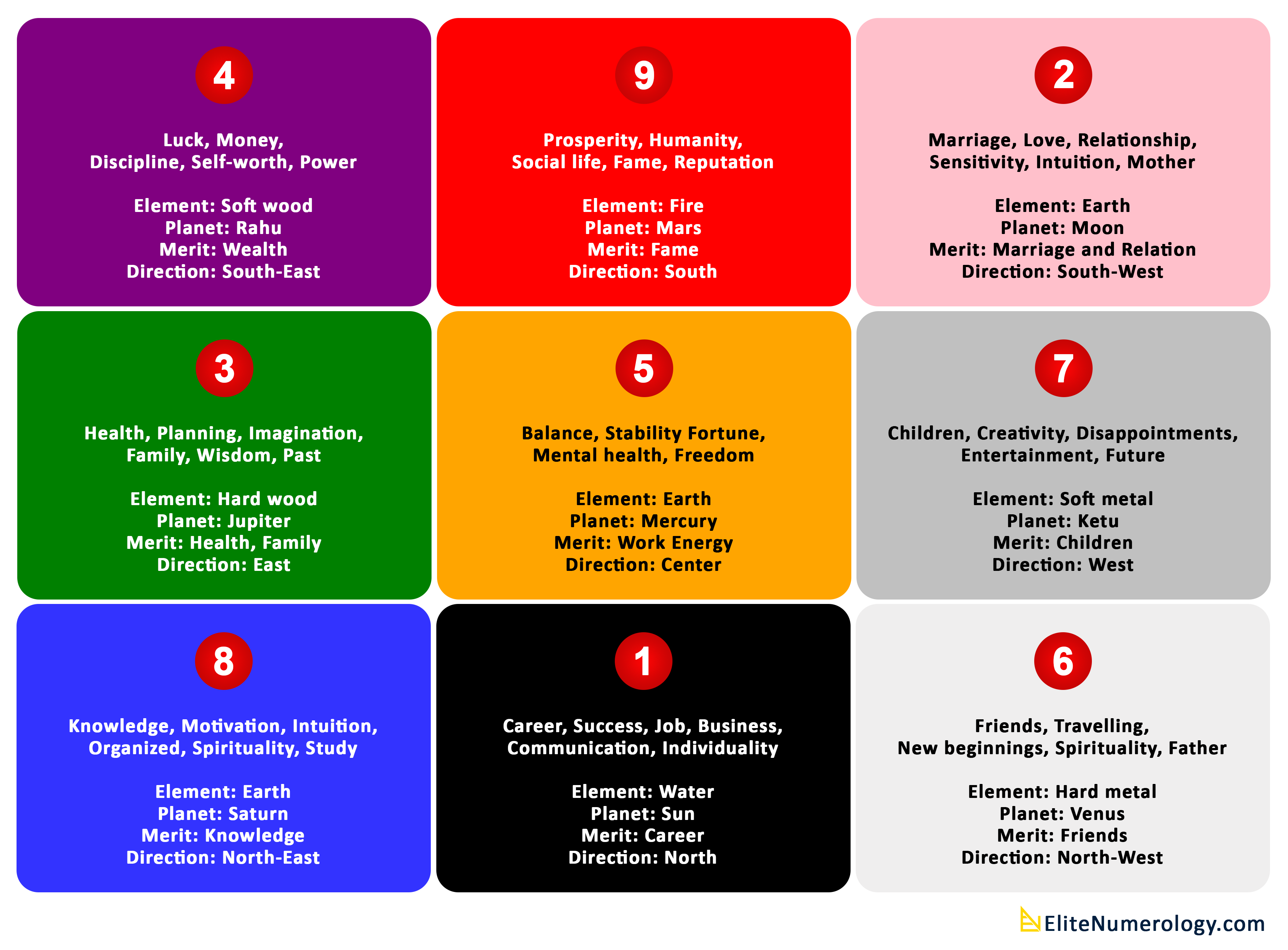
Calculate your Name Number: Sum of all the alphabets of your name reduced to a single digit using the chart below.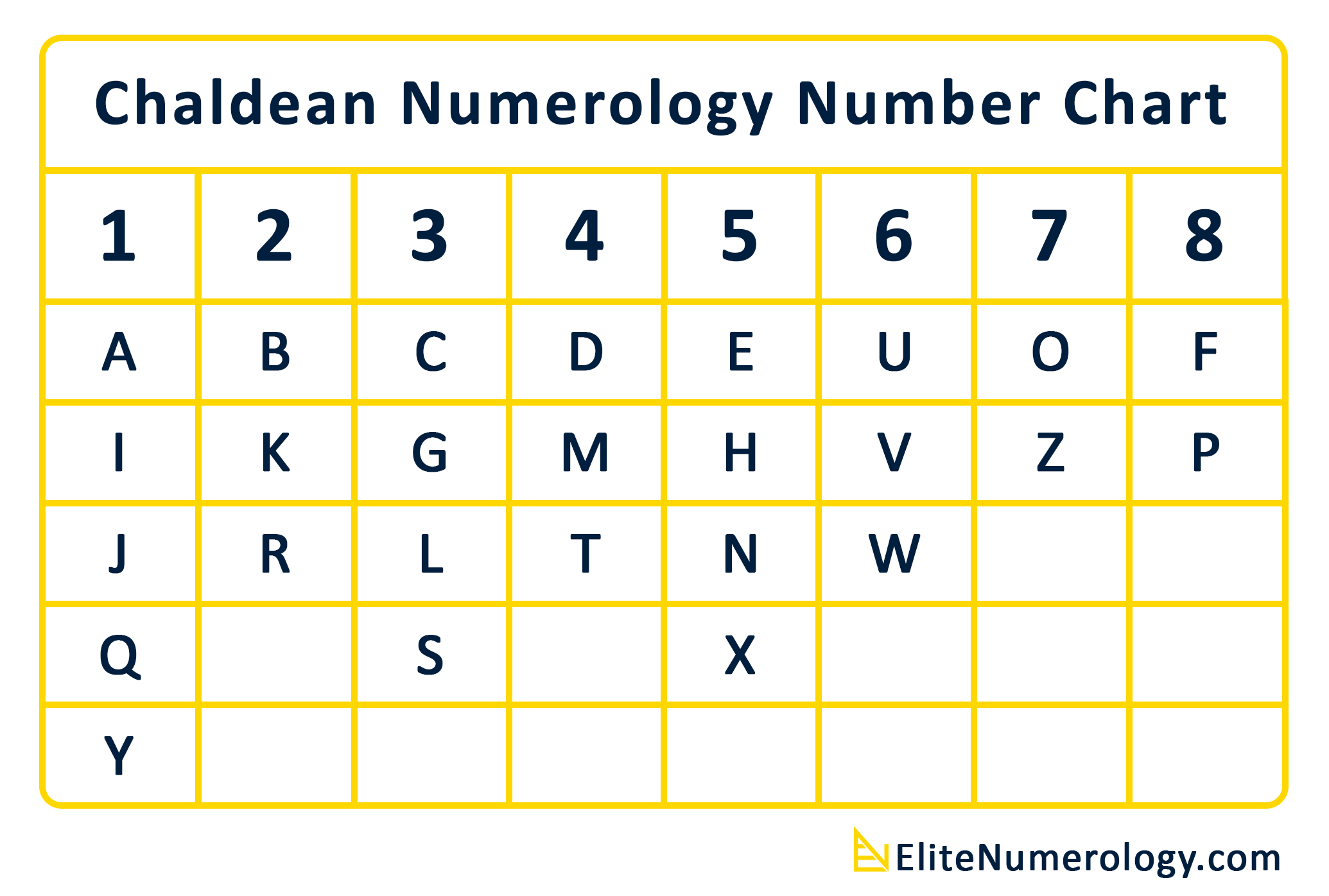
Now place individual digits of DOB in Lo Shu grid table, including driver number, conductor number, and name number as well.
Place the compiled numbers in the Lo Shu Grid at their fixed positions. Note that numbers missing from the range 1 to 9 will not appear in the grid.
Using these steps, you can calculate your Lo Shu Grid by hand for any given date of birth and name.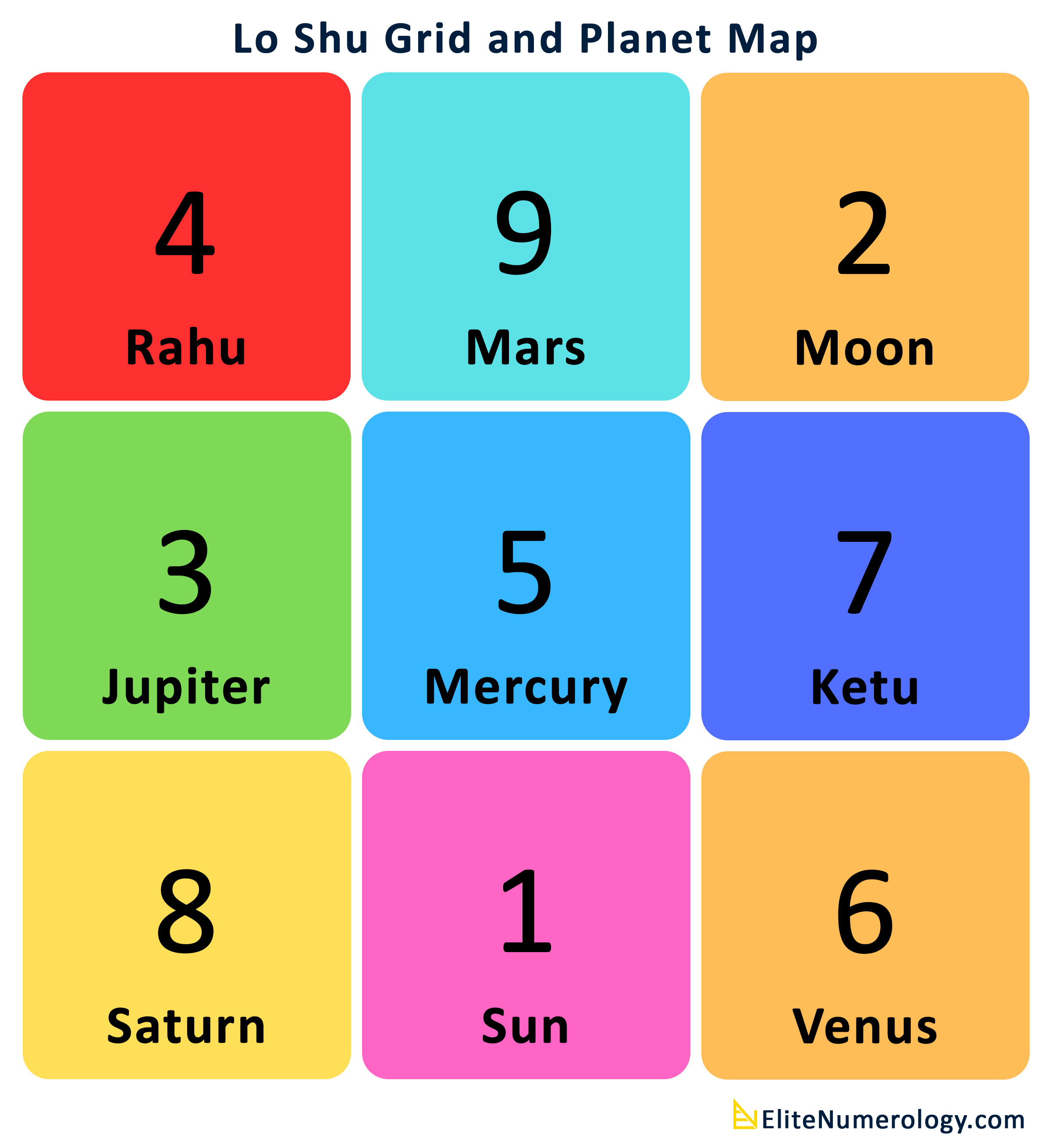
Step by Step Demo with Example:
1
Write Down Your Date of Birth and Name: Example: 23-05-1978
2
Calculate Driver Number: Sum of DD from your Date of Birth: 23 → 2 + 3 = 5
3
Calculate Conductor Number: Sum of all digits of your date of birth together until you get a single digit: 2 + 3 + 0 + 5 + 1 + 9 + 7 + 8 = 35 → 3 + 5 = 8. Reference Lo Shu Grid for more details.
4
Calculate Your Name Number: Sum of all alphabets of your name reduced to a single digit using the Chaldean Chart
5
Place Individual Digits in Lo Shu Grid. Numbers missing from the range 1 to 9 will not appear in the grid.
6
Compile and Interpret the Lo Shu Grid: Based on the fixed positions and missing numbers, interpret the grid to understand the influence of the numbers on your profile.
Lo Shu Grid Planes and Their Significance
In Lo Shu numerology, the numbers are arranged in the fixed pattern 4-9-2, 3-5-7 and 8-1-6. The three horizontal rows, three vertical columns and two diagonal lines form eight important planes or arrows. Numerologists traditionally use these patterns to study how a person thinks, feels, plans, acts and responds to life.
When all three numbers in a line are present, it is commonly interpreted as a completed plane or an arrow of strength. When all three numbers are absent, some systems describe it as an arrow of weakness. A partially completed line may show a quality that is present but not fully developed.
| Plane | Numbers | Traditional Significance | When Complete | When Incomplete or Missing |
|---|---|---|---|---|
| Mental Plane | 4-9-2 | Traditionally connected with thinking, intelligence, memory, imagination and the ability to understand ideas. | May indicate a sharp mind, strong memory, thoughtful planning and an ability to analyse situations before acting. | May suggest difficulty organising thoughts, maintaining concentration or expressing ideas clearly. |
| Emotional or Spiritual Plane | 3-5-7 | Associated with emotions, sensitivity, intuition, inner balance, faith and spiritual awareness. | May indicate emotional understanding, intuition, empathy and an interest in deeper or spiritual matters. | May suggest emotional confusion, difficulty expressing feelings or a need to develop greater inner balance. |
| Practical or Physical Plane | 8-1-6 | Traditionally linked with practical ability, physical effort, organisation, material responsibilities and everyday action. | May indicate practicality, discipline, good work habits and an ability to turn plans into useful results. | May suggest difficulty maintaining routines, completing practical tasks or managing material responsibilities. |
| Thought Plane | 4-3-8 | Associated with planning, order, methodical thinking and the ability to arrange ideas into a workable sequence. | May indicate strategic thinking, organisation, patience and an ability to prepare carefully before taking action. | May suggest scattered planning, indecision or difficulty creating a clear structure for goals. |
| Will Plane | 9-5-1 | Traditionally connected with determination, persistence, motivation, self-control and personal willpower. | May indicate strong determination, independence and the ability to continue working toward a goal despite difficulties. | May suggest inconsistency, reduced confidence or difficulty maintaining motivation over time. |
| Action Plane | 2-7-6 | Associated with execution, movement, responsibility and the ability to convert thoughts and intentions into action. | May indicate decisiveness, productivity and an ability to complete what has been planned. | May suggest hesitation, delay, unfinished work or dependence on others before taking action. |
| Success or Achievement Plane | 4-5-6 | Traditionally associated with ambition, responsibility, perseverance and the ability to work steadily toward achievement. | May indicate disciplined effort, practical ambition and the capacity to achieve goals through consistency. | May suggest difficulty sustaining effort, balancing ambition with responsibility or completing long-term goals. |
| Determination or Spiritual Insight Plane | 2-5-8 | Commonly linked with patience, emotional endurance, intuition, determination and learning through experience. | May indicate resilience, emotional strength and the ability to remain committed during uncertain situations. | May suggest impatience, emotional instability or difficulty maintaining faith and direction during challenges. |
Repeated Numbers in the Lo Shu Grid
The meaning of a number may become stronger when it appears more than once in the Lo Shu Grid. The table below explains how each number is traditionally interpreted when it appears once, twice, three times or four or more times.
| Number | Appears Once | Appears Twice | Appears Three Times | Appears Four or More Times |
|---|---|---|---|---|
| Number 1 | Indicates balanced independence, communication, confidence and self-expression. | May indicate stronger communication skills, determination and independent thinking. | May show powerful will, leadership and direct expression, but also stubbornness or impatience. | May create excessive self-focus, controlling behaviour, difficulty listening or resistance to advice. |
| Number 2 | Indicates sensitivity, cooperation, intuition and emotional awareness. | May indicate strong intuition, empathy and understanding of other people's emotions. | May show heightened sensitivity and imagination, but also emotional dependence or indecision. | May create oversensitivity, mood changes, insecurity or difficulty separating emotions from decisions. |
| Number 3 | Indicates creativity, optimism, learning ability and clear expression. | May indicate stronger imagination, communication skills and enthusiasm. | May show exceptional creativity and sociability, but also scattered thinking or excessive talking. | May create lack of focus, unfinished projects, unrealistic ideas or difficulty following discipline. |
| Number 4 | Indicates organisation, discipline, practicality and attention to detail. | May indicate strong planning ability, reliability and consistent work habits. | May show excellent organisation and persistence, but also rigidity or perfectionism. | May create excessive control, resistance to change, inflexibility or obsession with rules. |
| Number 5 | Indicates balance, adaptability, freedom and emotional stability. | May indicate versatility, curiosity, persuasive communication and quick adjustment to change. | May show strong adaptability and energy, but also restlessness or impulsive decisions. | May create instability, inconsistency, excessive risk-taking or difficulty maintaining routines. |
| Number 6 | Indicates responsibility, care, family harmony and commitment. | May indicate strong loyalty, compassion, creativity and concern for family. | May show deep responsibility and service, but also possessiveness or over-involvement. | May create excessive responsibility, interference in others' lives or neglect of personal needs. |
| Number 7 | Indicates reflection, analysis, patience, learning and spiritual interest. | May indicate stronger intuition, research ability and thoughtful observation. | May show deep analytical and spiritual tendencies, but also overthinking or isolation. | May create emotional distance, suspicion, withdrawal or difficulty trusting others. |
| Number 8 | Indicates discipline, persistence, authority and financial responsibility. | May indicate strong business ability, ambition and practical management skills. | May show powerful determination and leadership, but also excessive control or material focus. | May create work obsession, stress, dominance, inflexibility or emotional suppression. |
| Number 9 | Indicates ambition, courage, compassion, determination and a sense of purpose. | May indicate stronger leadership, generosity, motivation and emotional intensity. | May show great courage and ambition, but also impatience, aggression or unrealistic expectations. | May create excessive intensity, conflict, anger, demanding behaviour or difficulty accepting limitations. |
Repeated numbers are traditionally interpreted as amplified tendencies. More repetition does not automatically mean a better result. A quality may operate as a strength when balanced and become challenging when overexpressed.
Missing Number Meanings in the Lo Shu Grid
In Lo Shu numerology, a number is considered missing when it does not appear anywhere in a person's grid. Numerologists traditionally interpret a missing number as an area that may require greater awareness, practice or personal development.
A missing number does not mean that a person lacks a quality completely. It may simply suggest that the quality is not naturally dominant and may need to be developed consciously.
| Missing Number | Traditional Meaning | Possible Challenges | Development Focus |
|---|---|---|---|
| Missing Number 1 | Number 1 is traditionally associated with communication, independence, confidence and self-expression. | A person may find it difficult to express opinions, take independent decisions or communicate feelings clearly. | Practise clear communication, independent decision-making, public speaking and setting personal goals. |
| Missing Number 2 | Number 2 is connected with sensitivity, cooperation, patience, relationships and emotional awareness. | The person may struggle with patience, emotional expression, cooperation or understanding the feelings of others. | Develop listening skills, empathy, teamwork, gratitude and emotional awareness. |
| Missing Number 3 | Number 3 is traditionally linked with creativity, imagination, learning, optimism and verbal expression. | There may be difficulty expressing ideas, maintaining enthusiasm, organising thoughts or developing creative confidence. | Practise writing, reading, creative activities, learning new skills and sharing ideas with others. |
| Missing Number 4 | Number 4 represents discipline, organisation, structure, routine and practical planning. | The person may find it difficult to follow schedules, remain organised, complete tasks or maintain consistency. | Use daily routines, written plans, checklists, time management and step-by-step working methods. |
| Missing Number 5 | Number 5 occupies the centre of the Lo Shu Grid and is associated with balance, adaptability, freedom and emotional stability. | A missing 5 may indicate restlessness, difficulty adjusting to change, emotional imbalance or uncertainty while making decisions. | Practise moderation, meditation, balanced routines, thoughtful decision-making and emotional self-control. |
| Missing Number 6 | Number 6 is traditionally associated with responsibility, family, care, harmony, service and commitment. | The person may avoid responsibility, struggle with commitment or find it difficult to balance personal and family obligations. | Develop responsibility, fulfil commitments, support family members and participate in helpful or community activities. |
| Missing Number 7 | Number 7 is connected with reflection, patience, analysis, spirituality, learning and inner wisdom. | The person may be impatient, avoid self-reflection or find it difficult to learn from personal experiences. | Practise journaling, meditation, reading, patience and spending quiet time reflecting on experiences. |
| Missing Number 8 | Number 8 is associated with discipline, persistence, financial management, authority and material responsibility. | The person may experience difficulty managing money, remaining disciplined, handling authority or completing long-term goals. | Practise budgeting, financial planning, consistent work habits and taking responsibility for long-term commitments. |
| Missing Number 9 | Number 9 is traditionally connected with ambition, courage, compassion, idealism and a broader sense of purpose. | The person may lack clear ambition, struggle to complete larger goals or find it difficult to understand wider perspectives. | Set meaningful goals, practise generosity, participate in community service and work steadily toward a larger purpose. |
Important Note
Missing-number interpretations should be read together with repeated numbers, completed planes, Driver Number, Conductor Number and the overall Lo Shu Grid. One missing number alone does not define a person's personality or future.
Lo Shu Grid Numbers, Planetary Significance and Missing Number Remedies
In traditional numerology, each number from 1 to 9 is associated with a particular planet and a group of personality qualities. When a number is missing from the Lo Shu Grid, numerologists may suggest spiritual, behavioural or symbolic remedies intended to strengthen the qualities traditionally connected with that number.
| Number | Associated Planet | Traditional Significance | Traditional Remedies When Missing |
|---|---|---|---|
| Number 1 | Sun | Number 1 is traditionally associated with individuality, confidence, leadership, self-expression and the ability to take initiative. |
|
| Number 2 | Moon | Number 2 is associated with emotions, sensitivity, intuition, cooperation and nurturing qualities. The Moon is traditionally connected with the mother, emotional awareness and changing moods. People influenced by number 2 are often considered caring, supportive and willing to help others. |
|
| Number 3 | Jupiter | Number 3 represents knowledge, wisdom, guidance, teaching and spiritual learning. Jupiter is traditionally viewed as a teacher, adviser and minister. It is believed to increase curiosity, encourage learning and inspire people to share their experience and knowledge. |
|
| Number 4 | Rahu | Number 4 is linked with Rahu and is traditionally associated with logical thinking, calculation, planning and an unconventional approach to progress. A strong number 4 may indicate an active mind, although excessive mental activity may sometimes lead to overthinking or disturbed sleep. |
|
| Number 5 | Mercury | Number 5 represents communication, adaptability, intelligence, friendship and balance. Mercury occupies the centre of the Lo Shu Grid and is traditionally associated with harmony, social skills and the confidence to communicate in public. |
|
| Number 6 | Venus | Number 6 is connected with love, comfort, beauty, relationships, counselling and material enjoyment. Venus is traditionally associated with luxury, entertainment, affection and harmony between partners. |
|
| Number 7 | Ketu | Number 7 is associated with intuition, emotional depth, spirituality, calmness and inner awareness. Ketu is traditionally believed to encourage people to follow intuition and remain grounded during difficult situations. It may also indicate lessons related to trust, gratitude and emotional detachment. |
|
| Number 8 | Saturn | Number 8 is linked with discipline, responsibility, justice, patience and the results of sustained effort. Saturn is traditionally considered a slow-moving planet, so number 8 is often associated with delayed progress, hard work and gradual but lasting achievement. |
|
| Number 9 | Mars | Number 9 represents courage, energy, leadership, responsibility and a fighting spirit. Mars is traditionally viewed as a commander, giving motivation, self-belief and the drive to act. When overexpressed, this energy may also appear as impatience or aggression. |
|
Important Note
These remedies are based on traditional numerology and spiritual practices. They are not scientifically validated and should not be treated as guaranteed solutions for health, relationships, wealth or future events.
Remedies involving name changes, crystals, metals, yantras or changes to house, mobile or vehicle numbers should be considered carefully and, where appropriate, discussed with an experienced practitioner.
Common Life Questions and Traditional Lo Shu Remedies
Explore common questions related to marriage, children, health, career and finances. The number associations and remedies below are based on traditional numerology beliefs and should not be treated as scientifically proven causes or guaranteed solutions.
Important Notice
Missing or repeated numbers cannot diagnose infertility, illness, depression, financial problems, career difficulties or relationship concerns. Numerology remedies may be followed as personal spiritual practices, but they should not replace medical care, counselling, legal advice or professional financial guidance.
Frequently Asked Questions
A Lo Shu Grid is a traditional 3 × 3 numerology chart created from the digits in a person's date of birth. Each number from 1 to 9 has a fixed position. Numerologists examine present, missing and repeated numbers, along with completed or incomplete planes, to prepare a traditional personality interpretation.
Enter the complete name and write the date of birth in DD-MM-YYYY format. Place each non-zero date-of-birth digit in its fixed Lo Shu position. This calculator also includes the Driver Number, Conductor or Life Path Number and Name Number to provide a broader numerology interpretation. Repeated digits are entered repeatedly, while absent digits are treated as missing numbers.
In traditional Lo Shu numerology, a missing number represents a quality that may not operate naturally or strongly in a person's life. It may indicate an area requiring greater awareness, practice or personal development. A missing number should be interpreted with the entire grid and not used alone to define a person's personality or future.
A repeated number is traditionally interpreted as an amplified influence. A number appearing twice may strengthen its qualities, while appearing three, four or more times may make those qualities dominant or excessive. Repetition can therefore represent both a natural strength and an area that requires balance.
Planes or arrows are formed by the horizontal, vertical and diagonal combinations of numbers in the Lo Shu Grid. When all three numbers in a line are present, it is commonly interpreted as an arrow of strength. When all three are absent, some numerology systems describe it as an arrow of weakness or an area requiring development.
The terms Fortune Grid and Lo Shu Grid are sometimes used interchangeably by numerology practitioners. However, terminology and calculation methods may differ between numerology schools, particularly regarding whether the Driver Number, Conductor Number or Name Number should be included.
A birth-based Lo Shu Grid normally remains unchanged because it is calculated from the date of birth. Personal Year Numbers and other yearly numerology calculations may change annually, but they do not alter the person's original birth grid.
Yes. The full name is mandatory for this calculator because it uses both the date of birth and the name. The date of birth is used to create the Lo Shu Grid, while the full name is used to calculate additional details such as the Name Number, harmonising planet and suggested lucky name numbers.
A Lo Shu Grid may be used in traditional numerology to explore patterns connected with relationships, family, emotions, work habits and financial discipline. It cannot medically diagnose infertility or illness, guarantee marriage, predict exact events or replace professional medical, legal, relationship, career or financial advice.
Yes. This Lo Shu Grid Calculator is free to use, subject to a reasonable usage limit. It provides the grid, missing-number information and traditional numerology interpretations. Personal numerology consultations are available separately as a paid service.
Traditional numerology remedies may include mantra chanting, donations, colours, metals, spiritual practices and behavioural improvements associated with the missing number's ruling planet. These remedies are traditional beliefs rather than scientifically proven treatments or guaranteed solutions.
Zero does not have a fixed position in the traditional Lo Shu Grid and is normally excluded when placing date-of-birth digits. Only numbers from 1 to 9 are entered in their assigned positions.
Yes. A Lo Shu Grid may contain several missing numbers. Each missing number has a traditional interpretation, but the complete pattern should be considered together with repeated numbers, completed planes, the Driver Number and the Life Path or Conductor Number.
No. Lo Shu numerology is a traditional belief system used mainly for personal reflection and spiritual guidance. Its personality interpretations, planetary associations and remedies have not been scientifically validated.