Personality Number Calculator
A Personality Number is calculated from the consonants in your full birth name. In numerology, it is traditionally associated with the outward image you present, the first impression you make and how other people may initially perceive you.
It may describe qualities that are more visible in social situations, such as your communication style, behaviour, confidence and general approach toward others.
Use Calculator Below to Find out your Personality Number
Calculate your Personality Number
Enter your Full Name:
Result
Personality Number:

Calculate Your Personality Number
Write down your full name.
Identify the consonants in your name.
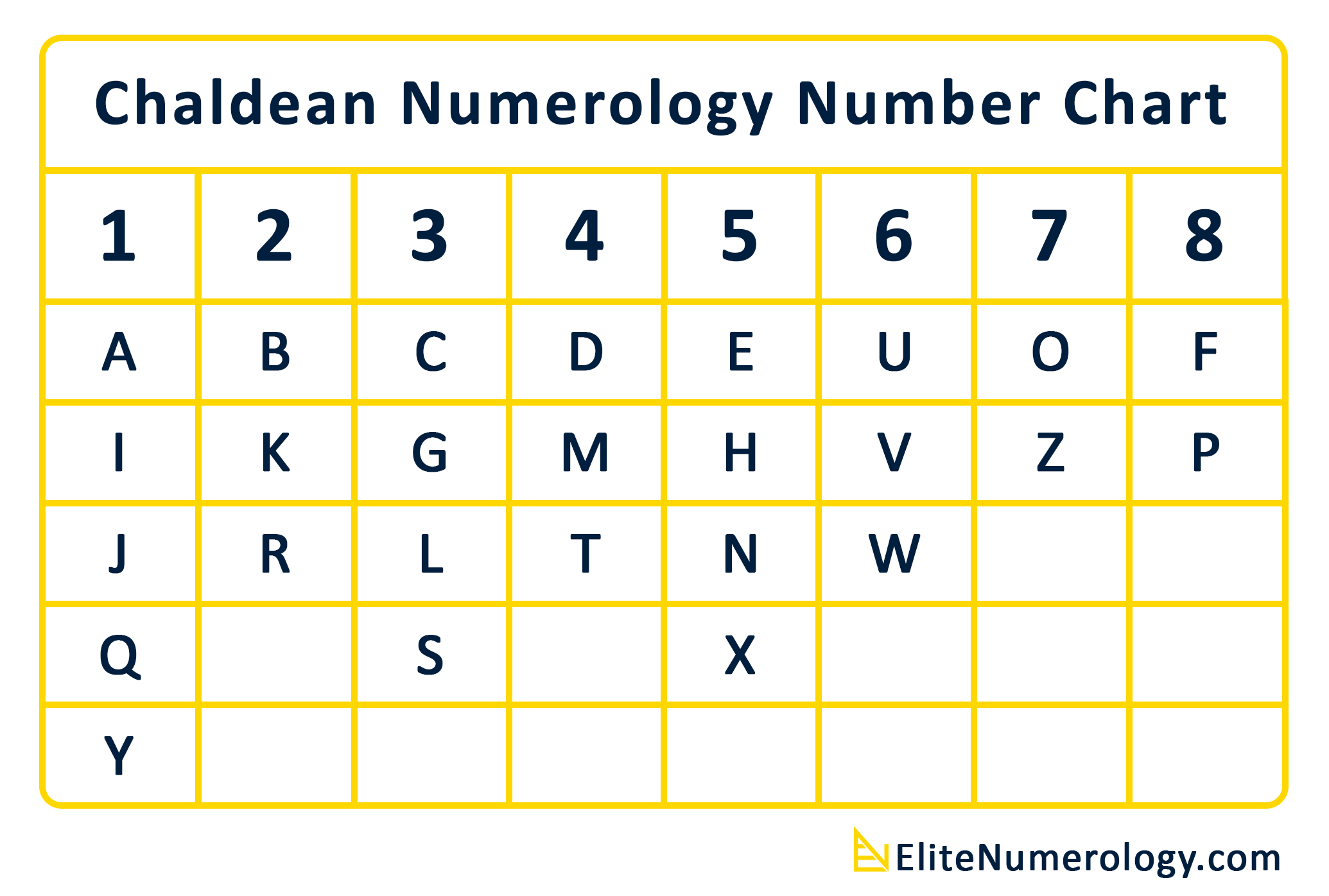
Refer to the Chandelean Numerology Chart to find the number of each consonant in your name.
Assign digits to each consonant.
Add all the assigned digits for the consonants together to get the total sum value.
Reduce the total sum to a single digit unless it is a master number (11, 22, or 33).
The resulting single digit or master number is your Personality Number based on the consonants in your full name.
Step by Step Demo with Example:
1
Write Down Your Full Name: Ashish Batra.
2
Identify the Consonants in your name: S, H, S, H, B, T, R.
3
Refer to the Chaldean Numerology Chart to find the number of each consonant in your name.
4
Assign Digits to Each Consonant: S = 3, H = 5, S = 3, H = 5, B = 2, T = 4, R = 2.
5
Add All the Assigned Digits Together: 3 + 5 + 3 + 5 + 2 + 4 + 2 = 24.
6
Reduce the Total Sum to a Single Digit: 24 → 2 + 4 = 6. The resulting number is your Personality Number: 6.
Personality Number Meanings, Strengths and Challenges
Each Personality Number is traditionally associated with the outward image a person presents, the first impression they create and the qualities others may notice first. The table below explains the meaning, strengths, challenges, improvement guidance and broader destiny-related traits linked with Personality Numbers 1 to 9 and Master Numbers 11, 22 and 33.
| Number | Meaning and Outer Personality | Strengths | Potential Challenges | How to Improve | Destiny-Related Traits |
|---|---|---|---|---|---|
| 1 | Often appears independent, confident, direct and self-reliant. Others may see this person as a natural initiator or leader. | Leadership, courage, originality, determination and the ability to take initiative. | May appear dominant, impatient, stubborn, overly competitive or unwilling to accept advice. | Practise listening, cooperation and patience. Allow others to contribute instead of trying to control every situation. | Traditionally associated with creating an individual path, developing leadership and learning responsible independence. |
| 2 | Often appears gentle, cooperative, polite and emotionally aware. Others may see this person as approachable and diplomatic. | Cooperation, empathy, patience, diplomacy, listening and relationship-building. | May appear indecisive, overly sensitive, dependent on approval or reluctant to express disagreement. | Build confidence, set clear boundaries and express personal needs directly without avoiding every disagreement. | Traditionally associated with creating harmony, supporting partnerships and learning emotional balance. |
| 3 | Often appears expressive, cheerful, creative and socially engaging. Others may notice communication skills and a lively presence. | Creativity, humour, communication, optimism, imagination and social confidence. | May appear scattered, superficial, emotionally dramatic, inconsistent or unable to complete plans. | Develop discipline, complete one task before beginning another and use creative expression with greater focus. | Traditionally associated with communication, artistic expression, inspiration and bringing joy to others. |
| 4 | Often appears practical, disciplined, dependable and organised. Others may view this person as serious and trustworthy. | Reliability, patience, planning, discipline, responsibility and attention to detail. | May appear rigid, overly cautious, resistant to change, pessimistic or too focused on rules. | Become more flexible, accept new methods and allow time for creativity, rest and unexpected opportunities. | Traditionally associated with building stable foundations, establishing order and creating lasting results. |
| 5 | Often appears energetic, adaptable, adventurous and freedom-loving. Others may see this person as exciting and open to change. | Versatility, communication, curiosity, adaptability, courage and quick thinking. | May appear restless, impulsive, unreliable, easily distracted or unwilling to maintain commitments. | Create healthy routines, think before acting and balance freedom with responsibility and consistency. | Traditionally associated with change, exploration, communication and learning through varied experiences. |
| 6 | Often appears caring, responsible, protective and supportive. Others may see this person as dependable and family-oriented. | Compassion, loyalty, responsibility, service, nurturing and the ability to create harmony. | May appear controlling, perfectionistic, interfering, overprotective or overly concerned with others' approval. | Respect other people's choices, avoid taking responsibility for everyone and maintain personal boundaries. | Traditionally associated with service, family, teaching, healing and creating supportive environments. |
| 7 | Often appears thoughtful, private, analytical and observant. Others may see this person as intelligent, mysterious or difficult to know. | Analysis, intuition, research, concentration, independence and deep thinking. | May appear distant, suspicious, emotionally unavailable, overly critical or isolated. | Communicate feelings more openly, develop trust and balance private reflection with meaningful social connection. | Traditionally associated with knowledge, investigation, spirituality, truth-seeking and inner understanding. |
| 8 | Often appears ambitious, authoritative, capable and business-minded. Others may see this person as powerful and goal-oriented. | Leadership, organisation, financial awareness, confidence, endurance and practical judgement. | May appear intimidating, materialistic, controlling, overly serious or focused only on status and achievement. | Balance ambition with empathy, use authority fairly and avoid measuring personal worth only through money or success. | Traditionally associated with achievement, management, influence, financial responsibility and responsible use of power. |
| 9 | Often appears compassionate, broad-minded, generous and idealistic. Others may see this person as mature and concerned with wider causes. | Compassion, generosity, creativity, understanding, tolerance and humanitarian awareness. | May appear emotionally distant, unrealistic, overly self-sacrificing or disappointed when others do not meet high ideals. | Set realistic expectations, maintain boundaries and help others without neglecting personal responsibilities. | Traditionally associated with service, completion, compassion, creativity and contributing to the wider community. |
| 11 | Often appears intuitive, inspiring, sensitive and emotionally perceptive. Others may notice intensity, creativity or unusual insight. | Intuition, inspiration, creativity, empathy, vision and the ability to influence others through ideas. | May appear nervous, emotionally intense, impractical, self-doubting or overwhelmed by expectations. | Develop grounding routines, manage sensitivity and turn inspiration into clear and practical action. | Traditionally associated with inspiration, spiritual awareness, teaching, creative communication and guiding others. |
| 22 | Often appears capable, disciplined, visionary and highly practical. Others may see this person as someone able to manage large plans. | Vision, organisation, leadership, discipline, endurance and the ability to turn ideas into practical results. | May appear controlling, overly serious, burdened by responsibility or afraid of failing to meet large expectations. | Break large goals into smaller steps, delegate responsibility and balance ambition with emotional and physical well-being. | Traditionally associated with building systems, organisations or projects that may create long-term value for many people. |
| 33 | Often appears compassionate, nurturing, responsible and devoted to helping others. Others may see this person as supportive or teacher-like. | Compassion, teaching, healing, responsibility, creativity and emotional understanding. | May appear overly responsible, self-sacrificing, perfectionistic, emotionally exhausted or involved in everyone else's problems. | Set boundaries, allow others to solve their own problems and balance service with personal needs and realistic expectations. | Traditionally associated with compassionate service, teaching, healing, guidance and responsible care for others. |
About Master Personality Numbers
Master Numbers 11, 22 and 33 are traditionally interpreted as carrying greater potential together with stronger pressure and responsibility. They may also express qualities of their reduced forms: 11 as 2, 22 as 4 and 33 as 6.
Frequently Asked Questions
A Personality Number is calculated from the consonants in your full birth name. In numerology, it is traditionally associated with the outward image you present, the first impression you make and how other people may initially perceive you.
This calculator identifies the consonants in your full birth name, assigns Chaldean numerology values to them and adds those values together. The total is reduced to a single digit unless the final result is 11, 22 or 33, which this calculator retains as a Master Number.
In numerology traditions, consonants are associated with outward expression, visible behaviour and the qualities that other people may notice first. Vowels are generally used to calculate the Soul Urge or Heart's Desire Number.
This calculator is designed to use your full birth name, including your first, middle and last name where applicable. A married, current or legally changed name may be calculated separately, but it should be treated as an additional interpretation rather than a replacement for the birth-name result.
The Personality Number is calculated from the consonants in the full birth name and is traditionally associated with outward behaviour and first impressions. The Destiny or Expression Number is calculated from all letters in the full birth name and is associated with broader abilities, talents and self-expression.
The Personality Number uses consonants and is associated with how others may initially perceive you. The Soul Urge Number uses vowels and is traditionally associated with inner motivations, emotional needs and personal desires.
The letter Y may function as either a consonant or a vowel depending on how the name is pronounced. For example, it acts as a consonant at the beginning of a name such as Yash, but may function as a vowel in names such as Lynn. Because pronunciation can vary, names containing Y may produce different results on different calculators.
Yes. Many people can share the same Personality Number. The broad interpretation may be similar, but how those qualities appear can differ because of individual experiences, behaviour and other numerology numbers.
The birth-name Personality Number normally remains constant because it is calculated from the full birth name. A different result may appear when using a married name, legal name, nickname, altered spelling or another numerology system.
Spaces, punctuation and symbols are normally ignored. Letters with accents should generally be entered using their closest basic Latin equivalent, such as É as E or Ñ as N, unless the calculator specifically supports those characters.
A Personality Number does not scientifically predict relationships, behaviour or future events. Within numerology, it may be used as a reflective tool for considering outward traits, communication style and the impression a person may create.
Different calculators may use different letter-value systems, Master Number rules or methods for handling the letter Y and accented characters. This calculator uses the Chaldean numerology system and retains final results of 11, 22 and 33.
Yes, the Personality Number Calculator is free to use within the available usage limit. Personal numerology consultations, if requested separately, may be paid services.
Spaces, punctuation and symbols are normally ignored. Letters with accents should generally be entered using their closest basic Latin equivalent, such as É as E or Ñ as N, unless the calculator specifically supports those characters.
Our Other Tools